Health and Safety Policy for Business Waste Removal Thamesmead
Purpose: This policy sets out the health and safety commitments and practical controls for our commercial and business waste removal services operating in the service area. It describes the standards required for safe collection, transfer and disposal of general refuse, recycling and specialist waste generated by businesses, retail outlets and light industrial sites. The aim is to protect staff, contractors, clients and the public while ensuring compliance with applicable health, safety and environmental obligations. Our rubbish collection and removal practice is founded on risk assessment, training, safe systems of work and continuous monitoring.Scope and applicability: This policy applies to all employees, agency staff, drivers, loaders, operatives and site supervisors engaged in waste collection, skip services, commercial rubbish removal and related activities. It covers vehicle operations, manual handling, mechanical lifting, hazardous materials segregation and the use of depots or transfer stations. The policy is designed to be compatible with national statutory requirements and voluntary industry standards, while remaining practical for routine day-to-day waste collection operations.
 Key responsibilities: Management has the duty to provide safe systems of work, adequate resources and training. Supervisors must ensure safe routes, correct kit and adherence to loading limits. Employees are required to follow instructions, report hazards and use personal protective equipment. The responsibilities include:
- Management: risk assessments, provision of PPE, vehicle maintenance schedules and contractor oversight;
- Supervisors: operational checks, on-site hazard briefings and incident reporting;
- Operatives: safe manual handling, segregation of recyclables and hazardous items, and immediate reporting of near misses.
Risk Assessment and Safe Systems
All routine and non-routine tasks must be assessed for risk before work commences. Assessments shall identify manual handling risks, exposure to sharps and biological contaminants, interaction with traffic, slips, trips and falls and the potential for hazardous waste like asbestos fragments or chemical residues. Control measures include route planning, mechanical aids for lifting, appropriate containment during transit and documented methods for segregating controlled wastes. Operational permits and job-specific method statements will be used where higher risk activities are identified to provide clear instruction to crews.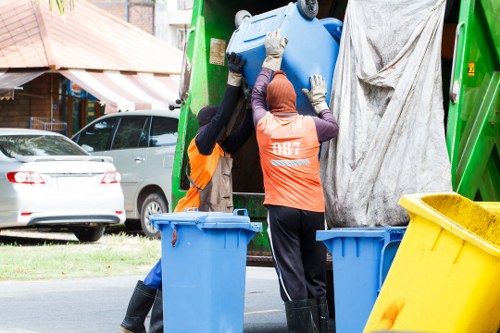
PPE, Training and Competence
All staff must be issued with and use suitable personal protective equipment: high-visibility clothing, gloves rated for puncture resistance, safety boots, eye protection and respiratory protection where dust or fumes are likely. Training covers safe lifting techniques, vehicle loading and securing, spill response and identification of hazardous items. Competence assessments are performed periodically, and refresher training is scheduled where changes in process or equipment occur. Records of training and medical fitness checks are maintained to demonstrate ongoing suitability for waste handling tasks.Vehicle safety protocols mandate daily walk-around checks, adherence to vehicle weight limits and proper load restraint. Drivers must follow defensive driving standards and be briefed on site-specific access restrictions. Mechanical lifting equipment and tail-lifts are inspected and tested per manufacturer guidance. Any defect which could compromise safety results in immediate withdrawal of the vehicle from service until repaired and certified.
Handling of Hazardous and Contaminated Waste: Where waste streams include hazardous components, the company will ensure classification, segregation and packaging meet regulatory criteria. Chemical containers, contaminated soils, oily rags and certain electrical items require specialist treatment. Transfer documentation and waste consignment notes are completed accurately and retained to maintain the chain of responsibility. Where asbestos or chemical spill incidents arise, work will stop until competent advice is received and safe remediation measures are implemented.
 Emergency response and incident reporting: Emergency procedures are in place to address spills, fires, injuries and vehicle incidents. First aid provision, spill kits and firefighting equipment are located at depots and on appropriate vehicles. Incidents must be reported through the internal reporting system and investigated to determine root causes and remedial actions. Near-miss reporting is encouraged to capture learning opportunities and prevent future harm. The company will cooperate fully with statutory investigations and implement corrective measures arising from enforcement notices.
Environmental Protection and Waste Hierarchy
We promote recycling, reuse and recovery where practicable and implement segregation at source to maximise diversion from landfill. Contractors and clients are briefed on best practice for separating dry recyclables, organics and residual waste to reduce environmental impact. Procedures for contaminated waste are stricter: secure containment, appropriate labeling and licensed disposal routes are mandatory for these streams. Continuous improvement targets are set annually and performance is reviewed by management.Monitoring, Audits and Legal Compliance
Regular audits and spot checks are carried out to verify compliance with this policy and with statutory obligations. Performance indicators include incident frequency, training completion rates and the proportion of waste diverted to recycling or recovery. Non-conformances trigger corrective action plans and timelines for resolution. The business assures clients and regulators that commercial waste collection services operate within the legal framework and follow responsible waste transfer practices.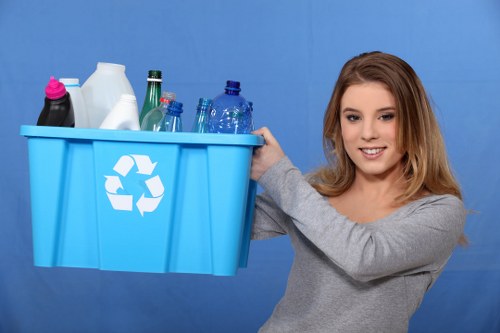 Review and continuous improvement: This policy is reviewed at least annually or when significant operational changes occur. Lessons learned from incidents and audit findings are integrated into revised procedures, job briefings and training modules. Employees are consulted on health and safety matters and encouraged to suggest practical improvements that reduce risk and improve service delivery. Our commitment is to maintain a safe workplace and an accountable approach to waste management for every contract and collection activity.
Approval: The policy is endorsed by senior management and forms part of the contract documentation for our refuse removal, rubbish clearance and business waste disposal activities. All personnel are expected to read, understand and apply this policy as a condition of employment. Failure to comply with safety requirements may result in disciplinary action. The company remains committed to protecting people, property and the environment while delivering reliable waste services to its service area.
